Home › Shop by Concern › Cognitive & Neuroprotection
Concern · Cognitive & Neuroprotection
BDNF, focus & neurotrophic research peptides.
Semax is a synthetic ACTH(4-10) analogue originally developed in Russia and the most-referenced peptide in cognitive and neuroprotection research — documented for BDNF upregulation, monoamine activation and stroke-recovery outcomes.
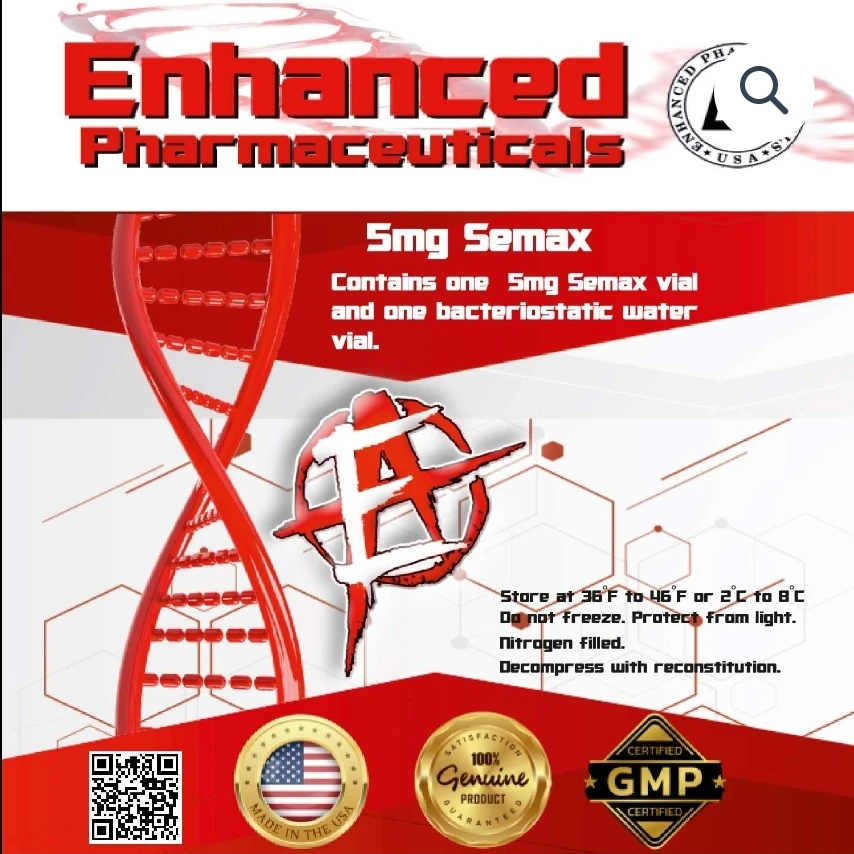
Semax listings
ACTH(4-10) analogue — BDNF upregulation research.
Why this concern
Semax is a seven-amino-acid peptide (MEHFPGP) analogue of the naturally occurring ACTH(4-10) fragment, without corticosteroid-releasing activity. Published research documents upregulation of brain-derived neurotrophic factor (BDNF) by 3–5 fold, activation of monoamine systems (dopamine, serotonin, noradrenaline) via MC4R and MC5R melanocortin receptors, and neuroprotective effects in stroke-recovery models (Skvortsova 2006). Read the full Semax guide →
Semax is widely referenced in Russian clinical literature for ischemic stroke recovery and in broader cognitive-enhancement research. Typical research protocols use intranasal administration (12–18 μg/kg in human studies; 50–100 μg/kg subcutaneous in preclinical work). For in-vitro research and laboratory use only.
Research Blog
Learn before you buy
Mechanism, literature dosing ranges and storage.
Peptide Guide
Semax: ACTH(4-10) Analogue Research Overview
MC4R/MC5R activation, BDNF 3–5× upregulation and stroke-recovery literature — what the published research shows.
Read guide →Foundations
Types of Peptides — A Map of the Six Classes
Where cognitive peptides sit in the broader landscape — healing, growth, metabolic, cognitive, mitochondrial.
Read guide →Foundations
What Are Peptides? A Plain-English Introduction
New to research peptides? Start here — what they are, why researchers care.
Read guide →For in vitro research and laboratory use only. Not for human or veterinary consumption. Not intended to diagnose, treat, cure, or prevent any disease.